An Empty Nest Chat With Fellow Author John Infortunio E156



John Infortunio writes about his father's Alzheimer's, and he chose fiction over memoir to do it. On this episode, he tells us why a character can hold what a memoir can't.
John is a lifelong educator, a native Brooklynite, and the author of two novels drawn from his own life. We get into how he balances that authenticity with fiction, what actually happens in his editing process, and how growing up in a tight-knit Brooklyn neighborhood shaped the way he writes.
He also talks about caretaking for his aging parents while raising his son, and what it took to stop comparing his son's twenties to his own.
What's in this episode:
- Why John chose fiction over memoir for his father's Alzheimer's
- How he balances personal authenticity with writing fiction
- His editing process, what gets cut and what gets built up
- Growing up in a community-rich Brooklyn neighborhood
- Caretaking for his parents while raising his son and building a career
- Letting go of comparing his son's twenties to his own
- Watching his son grow into his own political and social views
You can find John's books, Destroyed by the Events of the Day and Today Was Tomorrow, on Amazon https://link.amazon/B0dthUWCe (Amazon affiliate link), barnesandnoble.com, and Walmart.com.
Follow him on Instagram @johninfortunio.
📖 Our book is here! The Loud Quiet – Love, Laughter and Life in the Empty Nest https://www.theloudquiet.com
Distance, protection, and letting go show up in different ways in this one. Join the conversation in our Facebook group. https://www.facebook.com/groups/theloudquiet
🎧 Find all episodes, podcast apps, and YouTube links here: https://www.theloudquiet.com
CHAPTERS
00:00 Why fiction, not memoir, for his father's Alzheimer's
02:58 Hiding behind characters for emotional protection
04:02 Balancing authenticity while still writing fiction
04:21 Editing as the real filter for truth
06:12 Trusting instinct instead of staying guarded
08:23 How teaching shaped his approach to writing
10:44 Growing up in a tight-knit Brooklyn community
14:57 Caretaking for aging parents while raising his son
22:06 Letting go of comparing his son's twenties to his own
25:19 Watching his son grow into social and political awareness
28:22 Healthy disagreement and pushback with grown kids
Want to be a guest on The Loud Quiet - Empty Nest Living? Send Rick and Clancy Denton a message on PodMatch: https://www.podmatch.com/hostdetailpreview/theloudquiethost
Disclaimer: This podcast is for informational and entertainment purposes only. The views and opinions expressed are those of the hosts and guests and should not be taken as legal, financial, or professional advice. Always consult with a qualified attorney, financial advisor, or other professional regarding your specific situation. The opinions expressed by guests are solely theirs and do not necessarily represent the views or positions of the host(s)
Clancy Denton (00:00)
On today's episode, an emptiness chat with fellow author John Infortunio.
Rick Denton (00:06)
Welcome back to another episode of The Loud Quiet. Those of you that are watching this on YouTube may notice there's a different book sitting in the stand tonight. Then there is always an audience for a good story. And that's why today I'm so excited that we have fellow author and fellow empty nester John Infortunio. That's right. John is a lifelong educator and native Brooklynite. When he's not working or writing.
John can be found practicing the trumpet, watching his beloved sports teams traveling, and this one is the most important of all, searching for a perfect slice of New York pizza. John, welcome to the Loud Quiet.
John Infortunio (00:49)
thank you so much. So both of you, I am very, very happy to be with you guys today. And yes, the s the pursuit of the perfect slice of pizza continues as does coffee. Yes.
Clancy Denton (01:02)
I was gonna ask if you'd found it yet, so
Rick Denton (01:04)
Yeah, but we don't want him to say it on the episode so that we can just keep that for all of us.
John Infortunio (01:09)
Yeah, you have to gatekeep.
Clancy Denton (01:10)
Good pizza there. Yep, for sure.
John Infortunio (01:13)
Yes.
Rick Denton (01:14)
So John, there's a lot of your writing, you have chosen to have it come just straight out of your actual real life. And and that includes something as personal as your father's Alzheimer's. Now, most people turn that kind of material into a nonfiction memoir. What made you choose fiction instead? What is it about fiction that it gives you that nonfiction can't?
John Infortunio (01:40)
I think you know, that's a great question. I I I need I always had a desire to write about what I know. I've only really been able ever able to write about what I know and my experiences. But I think there is just a you know, if I'm being really honest, there's a safety net when it comes to writing in fiction. you know, you can play with a lot of feelings, you can play with a lot of thoughts, you can distance yourself from things that
really bring up a lot of emotion, a lot of you know, fear, a lot of tension and anxiety in you. I think, you know, to I don't want to say hide behind characters, but I I think in some sense, you know, you're able to hide behind characters in the storyline a little bit. And it feels safer. You know, you feel more protected. you know, some of the things that I write about are in, you know, incredibly painful things. They're they're sad, they're painful, they're
confusing at times. And I think to have sort of a a character stand in between, you know, you and those things. It's it's like having the bodyguard maybe that you're not really sure you need. But emotionally and psychologically it definitely it definitely helps.
Clancy Denton (02:58)
That's very interesting because, you know, our book is obviously a memoir and that's true. There were things that we put in there that were like, ooh, this is may open some can of worms for certain people or it just, you know, emotions like you talked about. We also dealt with Alzheimer's. That there's a lot of emotion wrapped up just in that.
Rick Denton (03:24)
I hadn't even thought of the the safety net aspect of it in the sense that you could almost have this plausible deniability with family or friends and be like, No, no, no, no, that wasn't me saying those words. Yeah.
Clancy Denton (03:33)
Or you or you're not you're not based on that character.
Rick Denton (03:36)
Yeah, someone else.
John Infortunio (03:39)
Yeah. It's definitely protection. Yes, it's definitely protection. There's plausible deniability. There is you know, all of those things that, you know, you mentioned. And, you know, and I think it allows you to create in a way that feels it does feel honest to you, but at the same time you do feel a little protected in some ways. You know, you really do.
Clancy Denton (04:02)
So how do you strike that balance? Because when we had our pre show call with you, you know, you're very authentic. You shared a lot with us. So how do you balance that authenticity with, you know, writing fictional stories to be able to still connect with your audience?
John Infortunio (04:21)
Yeah, I try to be as authentic as possible and I try to give the reader, my readers, as much of me as I possibly can. I I I think we're all sharing so many experiences together. You know, I think we are definitely sharing emotions and feelings and experiences. And sometimes, you know, you want to give all of yourself. What I do when I am r going through the writing process, I put everything in. I put it all in. And
Then when I'm editing, I that's when I go back and I just shave things off. I shave certain things off that I think that may be too much. That's not enough. Sometimes I'll even do it and I'll say, you know what, that's not enough. I'm not giving someone that has not lived this experience enough to understand how difficult or how painful it can be. And and it doesn't even have to be a painful experience. It could be something that
You know, you just want to convey a real true sense of something, a a real true sense of experience. and you know, you really have to gauge for yourself at certain parts when you're writing, am I giving the audience my reader enough? Am I not giving them enough? you know, because you know it, but will they relate and will they catch it and will they be able to invest you know, in a lot of different ways that you need your reader
you know, really to invest. so I think it's really up to you as the re as the writer to sort of say, no, in my editing process, I think I'm just gonna shave stuff off or no, I really have to bolster this because it's not translatable. so I think for me at least it's definitely in the editing process. I do a lot of that.
Clancy Denton (06:10)
Yeah.
Rick Denton (06:12)
Thinking about where you said that, like ooh, you know, in the editing process, I need to shave that off or that aspect of it. Do you find yourself I almost want to say it differently? Like, how do you not guard yourself too much? Because it I think as as humans, we naturally want to protect ourselves. We don't want to expose some of that deeper aspect, but for it to really get that true authenticity. And so it's I know you're making those decisions, but how do you do that?
Do you do you feel yourself getting guarded and then release, or how does that work in your editing process?
John Infortunio (06:45)
Yeah, that's a that's that's interesting in that sometimes you just feel it, you know, you feel it in your gut. I'm very instinctual. I'm very instinctive in terms of does this feel right? you know, I you know how how am I conveying this? There have been times where I've thrown out entire chapters because it just wasn't leading me in the right path on the right road. And I I I really started all over again with certain things. I even, you know
Start all over again with certain characters, you know, in in the books. And I I think you just have to listen to what you have to trust yourself in a lot of ways. I I think you really do. You have to trust yourself in terms of your ability, A, to tell the story, and then to tell the story with an authenticity that the reader really does, you know, feel because you're right. I I write as
most of my stuff could be translated into nonfiction. You know, they're all based on people or individuals that I've met and known or experiences I've lived, you know, either very connected to or slightly adjacent to. And you know, so I think a lot of us, you know, have to be if we're writing in that way, you have to be a good observer.
and you have to record be able to record a lot mentally so that you can convey it. You know, I think good writers are, you know, good observers of the world around them, but they're also really good listeners for sounds and dialogue and conversation and you know
Rick Denton (08:23)
I'm hearing some things in in your answer there that we I mentioned in the introduction that you have this background in education. I'm I'm I'm curious how much or how does that background in education influence the way you write and your approach to being an author today?
John Infortunio (08:43)
you know, no one's ever asked me that. I think I think as a teacher, you're always trying to convey. Yeah. I think you're always trying to explain, convey. You know, it's not easy trying to, you know, take work or ideas and concepts and communicate them through a diverse audience, diverse listening audience as a teacher.
You know, it's probably one of the the most understated things that teachers have to do if they want to be successful. You have to be able to teach to a diverse group of young people, different interests, different backgrounds, coming from all different places. And I think it helps you to be able to convey in different ways. There are some students that pick things up rapidly. There are some students that are different kinds of learners. You have to teach to the auditory learner, the visual learner, you have to teach to students that may
absolutely hate the stuff that you're talking about and they're trying they're trying to zone out. You may have a few kids that are really engrossed in what you're talking about. So as a teacher, you have to be able to really take this entire span of young minds and try to hit it in on multiple, you know, multiple ways. Yeah. And I think really good teachers are able to convey very complicated ideas in a number of ways so that
their audience, these young people in front of them, especially in this day and age, with with social media and things of that nature. I'll never be as interesting as social media.
Clancy Denton (10:18)
No, none of us will be here.
Rick Denton (10:19)
Yes.
John Infortunio (10:22)
Yeah,
I never will. but it's still our job to convey these these concepts. So I think, you know, for me it's just always been about listening, receiving back information. And, you know, after you've done it for a while, you really can pick up, all right, well, they've got it, they're not sure, or I lost the narrative thread with them somewhere. Yeah.
Clancy Denton (10:44)
Yeah.
I I really am enjoying that we're getting to do this episode because this is a little bit different than episodes that we, you know, normally do, but the artistic and element of, you know, talking to another writer and especially a writer of fiction, because most of our guests that we have on, it's all non-fiction. And being a fellow MD Nester and, you know, you talked about
you live in a very artistic area of Brooklyn and you know community is such a big part of emptiness life and just life in you know overall. How has that helped your writing and and how is your day to day emptiness life affected living in that, you know, super artistic area of Brooklyn?
John Infortunio (11:35)
yeah, you know, well, I've been very fortunate in my life to grow up in very community rich places and spots. And I think Brooklyn, I think New York, for my childhood, could not have gotten I I was incredibly fortunate to grow up where I grew up. I mean, my parents knew every one of my friends' parents. We all knew each other. the neighborhood was filled any single time from
30 to 50 kids. You you know, I could drive down the block, which I have. I've driven down the the old neighborhood with my son. and he had the fortune of then living in the same neighborhood. much different experience, but still. And I would drive down each block. I would say maybe five or six blocks across, 10 blocks down and up, and I could name every single family that lived in a lot of those homes where kids I knew.
You know, you used to also have generations of families. So my my I'm an only child, but I have two cousins very close, very close in age. And they may have gone to school with someone's sister, they may have gone to school with someone's brother, and you went to school with another sibling. Your parents all knew each other. It was a very close community in terms of schools and growing up. It was still the time in Brooklyn where you would sit outside and and at and during the summer and people would come out and bring
Coffee or lemonade or cake and you just sit out and it was just this really, you know, it's the sitting on the stoop thing. the old, you know, Brooklyn and New York and and w someone called it sitting used to sit on your porch. I was like, No, no, no, no, no. It's sitting on the stoop. we
Rick Denton (13:18)
Yeah.
John Infortunio (13:22)
We
are. Yeah, but I I was. I was really, really fortunate to grow up with that. And I think with that comes a rich, dynamic ability to tell stories. You know, we didn't have the excessive amounts of entertain you were your own entertainment. You know, you and all your friends were your own entertainment. And it helped you develop a quick wit. it helped you develop a bit of a sharpness, a humor, and
the ability to c ability to communicate with one another immediately without pause, without a text, or without an email, or without, you know, sending someone a a meme or a clip or something, you know, that it was immediate. And I think you did learn how to speak, focus, you know, change direction. you were very protective of the way that you behaved and looked because
You know, it was almost a this sort of killer be killed atmosphere where you're with each other where, you know, you didn't want to feel vulnerable. Yeah. and I think it really just helped. And can so community for me and family has always been, you know, huge. And I think I think it's I I try as best as I can to convey that in the stories, you know, to me. Family is in a really, really rich thing in which I try to tap into.
as much as possible. you know, who doesn't want to protected protectively write about their family and not suffer the consequences of like you said before?
Rick Denton (14:57)
Very, very well, okay, let's talk about that family aspect of it for for a minute because you've described this deep sense of community and deep sense of family. Well, that meant as an only child, you were the one as the primary caretaker for your parents as they aged. Yes. You also were doing that while you were raising your son, while you were in the middle of of a full throated career.
So what was that like? How did you manage all of that with that intensity of family, the intensity of needing to build your own sense of self and career and weave all that together?
John Infortunio (15:39)
a lot of therapy.
Clancy Denton (15:41)
Yeah.
John Infortunio (15:43)
Yeah. A lot of therapy, a lot of just you know I I think as an it was it was really there were times where it was just agonizing. really, you know, there were there were really days and nights where y you just didn't you wanted to pull your hair out and and you didn't know I didn't know some days how am I doing this? How am I getting through this? But
You just you do. you're not even really sure how you are going about it. But you somehow end up doing it hopefully, and you're you hopefully are doing it well. you're hopefully giving what is needed to give attention to the right amount, but you're also wanting to make sure that, you know, my my son was very young when I was going through both of the experience with with my parents, you know.
You know, and and he was in very formative stages. So you want to make sure that you're there and you're present. So you have any questions for him. He was very my son was very close to my parents. he was their only grandchild. And you know, it was funny how I would see them react to him versus when I was young, how they reacted to me. You know, it's
Rick Denton (17:01)
Little more tolerant, little more
John Infortunio (17:03)
yeah.
Yeah. It was it was frustrating and sublime all at the same time, you know, watching them with him and he with them. So it's a beautiful thing. But it was difficult, you know, to have him experience, you know, that as well. But I think you just have to be there, you have to be present, you have to make sure that you're listening. And something I was told, which really rang true for me, is that you're not going to get it, it's not always going to work. You're not always going to get each day right.
and I think you have to understand that and you can't persecute yourself. you know, it doesn't mean that you're any less than, it doesn't mean that you are you know, doing this whole thing the wrong way. You just have to learn and understand that each day is going to be its own, you know, animal and you're hopefully getting it right. You're hopefully nailing the things that you have to nail. You're going to forget some stuff, you're going to lose your patience, with those around you at times, but
if you have a support a good supporting cast of people also, I think that's that's really, really significant. I don't know any other way that you could possibly do it unless you have somebody you can at least vent to on a somewhat daily basis.
Rick Denton (18:17)
Do you hear f I I love I love Sublime. I love
Clancy Denton (18:21)
Frustration.
Rick Denton (18:23)
that that'd be a really good band name. Frustratingly sublime or something. The there's there's elements of that I'm also hearing like supporting cast. I there's so much of what you're describing. I can see why you're an author. I can see why you chose to write a book, a fictional book using your father's Alzheimer's as inspiration. This idea of
being able to express it in that way and bringing it out. You talked about therapy. I gotta imagine the book itself was a therapy in its own way. Yeah.
John Infortunio (18:52)
Yeah, it really was. Thank you for that. that, you know, sometimes you write and you're not sure if the person who's read the book has seen has really seized you and what your attempt is. yeah, I do. I think a lot of this, you know, it's funny because I a ri my original attempt with this book was I really wanted to focus on a book about unreliable narration, an unreliable narrator and what
I wanted to play with those ideas of how do you get an audience and how do you write a book like that where you want your your audience to invest, but at the same time they're not sure if you're taking them down the right kind of road or one of the characters is. So that was the kind of, you know, ruminations I had when I started this. and then I thought to myself, Well, how how am I going to go about go about doing that? And
I said, you know what? There were days where dealing with Alzheimer's and dealing with everything around that surrounded it really did put you in a place where you kind of felt like you were dropped off somewhere blindfolded and you had to figure it out. Yeah. and I think, you know, for me, I think I I just settled upon the fact of all right, I'm going to go down this road and I'm going to write.
you know, a story about this because I don't and I had a great relationship with my parents and my dad. I I added the component in the story of it being a challenged relationship between the father and the son. because I thought that would add to that. but then I also think, you know, whether you've gotten along marvelously with your family your parents or not, I think you do have to make a decision as a as a child.
of how much you can do to help your and to be there and to be present. Yeah. so I think there was a lot of decisions that needed to go into my journey as a human being. But then I also had to include that in the book of what you know, will will Peter actually go along for this ride? with there being resentment and anger and confusion and
him feeling misled in a lot of different ways. and then, you know, so for me, the the long-winded way of saying that, I think I had to really dig down deep inside and say, all right, well who do I who do I include to be his sort of supporting cast? Because I knew I had, but who is this character going to have to help him do it?
Clancy Denton (21:41)
I love that, yeah, the supporting cast, and that goes back to the community element. You know, you were an only child and you have an only child. Yes. How has that been launching him? You know, we we had two, so we got to do it twice. But I would imagine if I just had one, it would have been like, goodness, that's it.
Rick Denton (22:06)
Yeah.
John Infortunio (22:06)
Yeah. You know, my only journey experience was was an interesting one. I was actually born a identical twin. and my my twin's name was Michael, and that's the character's name, that's the protagonist's name in my first novel. so I wrote I wrote that through there. So talk about another therapy session of, you know, writing about stuff. And you know,
You know, he passed when we were very young. He passed at a few months old. but it was it was a very, very it was something my parents, you know, never got over. They were they were never truly over it. and you know, so when I had my son, when we had my son Kevin, who is now twenty three, and I can't believe that, you know, I I don't know where that time goes, but
You know, having a only child is something that, you know, you want to say, No, look, I did it this way. Why aren't you doing it that way? Uh-huh.
You know, and you know, you know as parents as well as I do, and probably a lot of the listeners will know that a twenty three year old is not the same as twenty three when we were younger. The the times are different. Yes. you know, I think there was a totally different worldview and dynamic and
So to make those comparisons, I had to realize to make those comparisons was unfair. And you can't impose your will upon, you know, another, you know, your your child. So I think you just have to, for me, I just realized, you know what? He has to have his own journey, his own outlets, his own way of doing things. and you know, he loves music. He is a really talented you know, singer in a different kind of genre of this kind of alternative.
music and he loves to perform. he loves to create in that way. He's very, very creative. So I think a lot of the times if we're not commiserating about certain sports teams that we root for, we're really talking about, you know, creativity a lot of ways. and while he's making fun of my music choices, you know, you know, I'll have him put his music on in the radio and I will say to him, I don't even know how this how you listen to this. So it's this
You know, ongoing battle of that. I I'm going to see Mumford and Sons tomorrow at Madison Square Garden. I have an extra ticket. I begged him to come and he said there's no way I can sit through two hours of that. So Yeah. So this is the kind of
Rick Denton (24:43)
It's not even like you're talking about some, you know, ancient classic rock. I hear you talking about Mumford and Sons being something that a 23-year-old would pass on. Yeah. Okay. So you you're hitting that stage though. You mentioned something there that almost right at 23, that you can talk about sports teams. Yeah. You're also talking about other things that sound a little deeper than the sports teams. Are you finding that this stage of sort of emptiness and your relationship with your young adult son?
Are you seeing some of those conversations beginning to grow? Has it always been that way?
John Infortunio (25:19)
well, you know, I have to say that it's it's very lateral from when I I was growing up, my father and I, you know, most of our conversations stemmed from sports. Mm-hmm. that would be a way we would begin a conversation. And we spent a lot of time just sitting next to one another and and watching games.
Right. or just being in each other's presence, you know, and pretty much every sport, you know, from bowling to football to hockey and baseball. and we rooted for some different teams at times. So that was kind of a you know, that added to the spice of it. Our my conversations and my you know, with with my son have changed quite a bit. I mean, he's become over the last, I would say,
Five, six years very much into politics. you know, so that has become he's become very socially aware as he's gotten much older. And I'm very proud of him for that. I'm very proud of the fact that he has a depth to him that you know he's willing to share not only his thoughts and opinions, but he's also
willing to have that debate with you, a fair and open debate about certain things. And I think that's a beautiful thing when you can see your child become socially aware and you can see them asking questions, difficult questions about the world around them and why things are happening, you know, idealistically, why things are happening, why maybe even they're not happening. and you know, you've probably asked yourself the same questions of, wow, where did he where did he get
Well, where did she get that idea from? You know, and and you know, there are so many different outlets for young people to get information from. You have to hope that they are they're working at it with a broad view. they're getting as much information as possible to inform and educate their understandings and decisions. So that's what we t you know, we do. We will sometimes sit down and have some really, really interesting conversations. And I walk away.
amazed sometimes. sometimes I I I want to say that, you know, you have to be kidding me, right? Yeah. how do you think that's possible? But it has also lent itself to us, you know, talking about some, you know, literature and things like that. we went to see, you know, we went to see the Odyssey yesterday. Yeah. and you know, we were talking about that for he and one of his friends and I. We went
Went to see it and that led to a really interesting conversation about you know d directors choices right you know, film. So right. Yeah, it's about experiences and just sharing it and being present. I have
Rick Denton (28:22)
Absolutely enjoyed that, but with both of my children, children. But I'm specifically thinking of conversations that I've had with my daughter and how those have changed from when they're young, and you're trying to say, hey, these are our values, this is what we think, this is how we to her now having her own set of opinions and being able to have a healthy, honest, real disagreement.
John Infortunio (28:46)
Yes.
Rick Denton (28:47)
And yet we still walk away loving each other.
Yeah. And seeing her maturity grow to where she can have that pushback with you and not just a you know, okay boomer kind of view, but rather respect my views as well and have that back and forth is something that is so exciting to see in her.
Clancy Denton (29:05)
Well, and I think that as we all are creatives, I think that helps some too when you're having those conversations because we find ourselves a little more open minded than some people may be. And so I think that what, are you agreeing with me or not? I'm open
Rick Denton (29:26)
No,
I'm not agreeing with you because I think that that's that that often that that that that category can lend itself to a a certain worldview that is in opposition to other worldviews. And that's what I love so much about my creative daughter is that even though there are other worldviews that she might disagree with, she at least is willing to hear them out and respect them.
Clancy Denton (29:48)
But I think that goes to also that the type of parent that you are and yes, because
Rick Denton (29:55)
Well, John, I let
let's pat ourselves in the back, all three of us.
Clancy Denton (30:00)
I am because there's a lot of parents that would not even have that conversation with their kids or be open to hearing what they think. You know, even parents our age that, you know, we are we have grown up with these kids that are exposed to so much more. And I think that so yes, I will pat myself on the back.
Rick Denton (30:19)
know
what else is sort of a risk? And John, I'm glad you didn't say that when you were talking about talking with your kids, 'cause I know there's that risk of, just wait till you have fifty years of experience or something kind of smug like that. Like I have tried everything I can to avoid that phrase because so much of the new ideas will come from youth that don't have the baggage of fifty years of experience. So it is so tempting to use that as a as the nuclear weapon in any sort of debate.
John Infortunio (30:44)
Yes. Any any way you can destroy some sort of progress in a conversation is just throw that in there. Yeah. it sort of just discounts the entire you know ex their experience.
Clancy Denton (30:56)
It'll be very interesting to see them when they start having children and them trying to raise their children. So
John Infortunio (31:04)
Wow, yes. Yeah. That would be Yes. I'm not ready for that.
Clancy Denton (31:07)
That'll be interesting to see. we aren't either.
John Infortunio (31:12)
not ready for that moment or that time yet. But it I'm sure it's a a beautiful thing. But I I think that it definitely introduces you to the next step in your stage in your as an adult in our development, you know. yeah. I I I think
Rick Denton (31:28)
I'll hold off.
Clancy Denton (31:31)
We don't need that.
John Infortunio (31:32)
Yeah. We do have to pat ourselves on the back though, because I think you do have to allow I think you just have to allow them to find their own kind of discourse and support that and not want to shut them down all the time. And so I think it helped me. It helped because I was teaching and listening to and you know, getting feedback from young people for most of my career. And you know, I think it just helped me to
you know, let him have his voice and hear what he had to say without interjecting, you know, and playing that double dutch in the conversation of just say, you know, say what you want to say and then let's have some informed, you know, discourse and conversation about the whole thing. Absolutely.
Clancy Denton (32:18)
I totally totally agree. And and yes, I'm sure being an educator, yes, you see all kinds of things. And John, this has been great. I I mean, really fun, fun episode. Tell everyone where they can find your books. Tell us I know y you have two. This is the second one about that deals with the Alzheimer's. And yeah, do you have another one coming, I think you said?
John Infortunio (32:40)
I
do. I started I started writing a third not connected. So the first one, Destroyed by the Events of the Day, has been out since twenty twenty two. Can't believe that is four years old. this guy right in front of you today was tomorrow came out early this year. and yes, so I have a third one that I am writing. Yeah, I guess in some I I I rashly said it's not connected, but what I did was in the third book is
I took a couple of the characters that people love from the first and second novel and I'm interweaving them into a third story. yeah. And so it's going to go in a a different kind of direction. but it'll have the same, you know, it'll have the same kind of voice. It will be fiction. so it's in the early, you know, very early stages. and I'm having fun with it. so you can get both of these books, Amazon online,
This second book is also available at Bonja Noble dot dot com and as well as Walmart.com. we were able to get this one into. Yeah. And if you're in the New York Brooklyn area, there are a few independent bookstores that I just love. And I've always said to people, we need to go to bookstores, we need to shop at bookstores, support them, love them. They are really remarkable places.
and then, you know, people can message me on Instagram and things like that, Substack. I do want to i exchange with folks and I do want them to know what I'm doing. But also I want to I want to hear from other writers and and creatives as well. So I'm trying to do that.
Rick Denton (34:22)
That's great. We'll get all of that into the show notes. So John, what a what a great ride we've been on. I imagine that your novels are the just the same as this conversation, a whole lot of fun. John, it was fantastic having you today. Thank you so much for joining us here on The Loud Quiet.
John Infortunio (34:38)
Thank you. I'm absolutely honored to be with you guys and I appreciate it. I'm so grateful. So thank you.
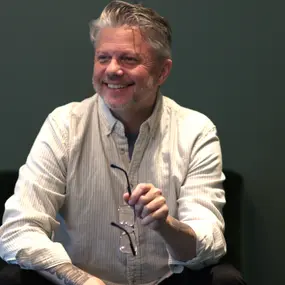
John Infortunio was born in 1972 in Brooklyn, New York. He remains a lifelong
Brooklynite having grown up in Windsor Terrace, then moving to Bay Ridge, and now
the burgeoning Gowanus neighborhood, replete with many art installations and studios.
His mother, Marie, was a Speech and English Language Learner Instructor for the
Department of Education for over 20 years. His father, John Sr., was a child of the Great
Depression, having been born in 1929. John Sr. worked in printing before shifting to
working on Wall Street. Many of John Jr.’s summers were spent going to work with his
father as well as helping his mother work on her classroom plans and lessons. John Jr.
was an identical twin, but due to health problems his twin passed at a very early age.
John always felt that he learned how to truly embrace love from his mother and to
always appreciate everything around you from his father. Although they passed in 2014
and 2019 respectively, he has always considered them to be his heroes. He was taught
the importance of values, determination, hard work, and kindness to everyone you
encounter.
John attended catholic schools for most of his academic life. The centralities of
attending catholic school and all that go with it can be seen in some interwoven themes
in his work. There is also quite a bit of his work that is inspired by the city he grew up in
and the relationship of the individual to their surroundings. In John’s case it was a
childhood replete with many friends and the interwoven fabric of the small neighborhood… Read More