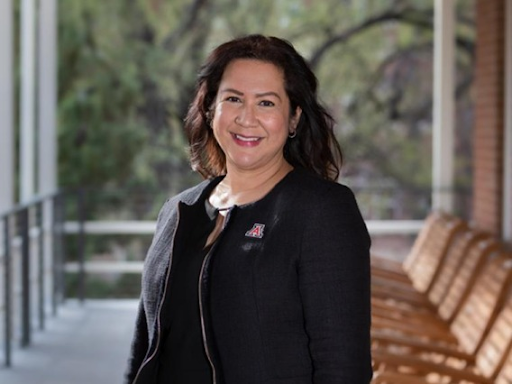
Why University Family Engagement Offices Are Vital With Annamarie Tellez E159



Mid-semester is when a lot of families start asking these questions.
What can a parent do after three weeks of silence? Why do so many students start struggling right around week six? And how do you support your student without stepping back into the driver’s seat?
Annamarie Tellez is the director for parent and family programs at the University of Arizona, where our daughter is a senior. Annamarie is also the parent of three Wildcats. Her office is where families go when they don’t know who to call, and she sees the same worries come up with every new class. This is our second conversation with a university family engagement leader.
What’s in this episode:
- What to do when you haven’t heard from your student
- Who to contact on campus when something feels off
- Why homesickness tends to show up around the six-week mark
- What helps a student find their people on a big campus
- How to support your student without taking over
- Why your second kid’s college experience may look nothing like the first
- How often families can expect to hear from the university
University of Arizona Parent & Family Programs https://uafamily.arizona.edu
📖 Our book is here! The Loud Quiet – Love, Laughter and Life in the Empty Nest https://www.theloudquiet.com
If your student has called home sounding a little different this semester, tell us how you handled it in the Facebook group. https://www.facebook.com/groups/theloudquiet
🎧 Find all episodes, podcast apps, and YouTube links here: https://www.theloudquiet.com
CHAPTERS
0:00 Welcome and our University of Arizona connection
1:16 Adjusting when the school updates stop
4:25 Where families turn for campus resources
6:39 Learning to step aside as a parent
9:20 Easing anxiety after you leave campus
11:53 When you haven’t heard from your student
14:40 Supporting your student without taking over
16:36 Why each kid’s college experience differs
19:17 Homesickness and finding a place on campus
22:58 How a club fair helped our daughter
25:17 How often families hear from the university
Want to be a guest on The Loud Quiet - Empty Nest Living? Send Rick and Clancy Denton a message on PodMatch: https://www.podmatch.com/hostdetailpreview/theloudquiethost
Disclaimer: This podcast is for informational and entertainment purposes only. The views and opinions expressed are those of the hosts and guests and should not be taken as legal, financial, or professional advice. Always consult with a qualified attorney, financial advisor, or other professional regarding your specific situation. The opinions expressed by guests are solely theirs and do not necessarily represent the views or positions of the host(s).
Clancy Denton (00:00)
Today on the Loud Quiet, Why University Family Engagement Offices Are Vital with Annamarie Taez.
Rick Denton (00:07)
Hey everybody, welcome back to the Loud Quiet. Today's episode is fun for us. It's actually personal. Our daughter goes to the University of Arizona and there's a special connection to today's guest.
Clancy Denton (00:19)
Yes, we are so excited to have Annamarie Tellez with us today. She is the director for parent and family programs and director of outreach and events within the Division of Student Affairs for the University of Arizona, says which we have been to many times and we love it. She is dedicated to fostering strong partnerships between the university and the families who support their students.
In this role, Annamarie leads various initiatives designed to inform, connect, and empower families as essential partners in their students' college journey. Annamarie, welcome to The Loud Quiet.
Annamarie Tellez (00:55)
Thank you for having me. Excited to be here and I'm really happy to see you wearing that block A on your shirt. That's right.
Rick Denton (01:01)
Right. That's right. For those of y'all that are on the audio only broadcast, ha have a peek over at YouTube or at Spotify. Check the video. Yes, I am wearing University of Arizona gear today in honor of well, our guest and our daughter.
Clancy Denton (01:13)
I didn't I didn't pull mine out, sorry.
Rick Denton (01:16)
But
you've got plenty. You'll be representing soon when we head back to campus here in a few weeks. An or you have used a phrase, I've heard it when we had a chance to talk with you earlier, I've heard you use that phrase in other contacts as well. That often college is a student's first experience with sustained independence. How can families understand and support that new and unique kind of independence?
Annamarie Tellez (01:44)
That's a great question. I really lean into that because during the transition, and I don't know if you experienced this with your college age students, but we're connected to our students starting from the very beginning. And so I think about high school when I'm receiving the emails weekly. Sometimes they were daily updates of attendance and grades and it was just a lot of information and you receive that for
I don't know, the last 10, 15 years, and suddenly they're off to college. And I know families they're looking, they're looking right at us in our department saying, okay, so what does connection look like? And so that sustained independence means they're leaving home for the first time. If they're commuters, which we have many commuters on campus, they are spending more time on campus, and it doesn't look like the traditional eight to three Monday through Friday.
They might have evening classes or they're staying later at the library to study. And so I try to give that reminder that it's gonna look and feel different in your home and to be prepared. And so I think it's important. I think it's an important reminder before anything starts that your students are growing into they're growing up into this different role and they should have that autonomy to make some decisions and
I try to remind them because you can see when I'm having this conversation in person and we just hosted all of our welcome events in August, the eyes welling up and they're they're feeling a little bit of emotion because their students are adults and they're growing up and it's that time for us to let go and allow them to experience that. And sometimes they make mistakes or you know, they're still learning and growing and it's our job to still support them.
And our role on campus is to make sure that families have the resources to support them if that happens.
Clancy Denton (03:47)
love that you brought that into it because I a and we as parents, pretty much by the time they got to high school, we had I didn't check ours was called hack. I didn't check their grades. I didn't check, you know, yes, I would get a call if they didn't show up to class, which rarely happened. But I love that you said that because yeah, some parents are used to getting a daily email from a teacher or from the attendant's office or from those things that yeah, then it's just
silence, but I understand that for other parents who that probably is
Rick Denton (04:22)
If it'd been your rhythm, I could see it's
Clancy Denton (04:25)
and you know, you have a unique role because you are in the student affairs office and you have a big role in the parent and family programs. How do you straddle both of those lines and how do you relate to parents from the student's perspective and from the parents perspective?
Annamarie Tellez (04:43)
I'm gonna add one more line in there that I'm gonna chat a little more about too is I'm also the parent of two wildcats, current wildcat who recently graduated in May. So I feel like there's Congratulations. Thank you. there's three lines that I'm balancing there. And so and I combine all of them. So parent and family programs, just making sure that our families feel connected with, engaged with, that they're receiving regular communication.
But it's gonna look and feel different. It's not the same level of connection. Something I remind families is that access looks different. It's at the end of the semester. And the funniest thing I love to say is sometimes at the end of the spring semester I'll receive a phone call saying, I used to have access, but I don't anymore. Well, resend it.
I've had them call me and say, What do you mean they can resend it? How am I paying the bills? What should I do?
that's a conversation between you and your student. and so that's the parent and family role, but I have to lean into student affairs because of all of the resources that are provided outside of the classroom. And it's not just student affairs. our department is aware of many things going on around campus with the student unions, with other areas that pertain to their student success.
But really student affairs is that. That's the housing, that's campus health or disability resource center, the dean of students office. And so you think about all of those resources to support their students outside of the classroom. And so when they call, I can automatically say, This is the link, this is a resource. And if it's a dire situation, maybe it's just emailing directly to my colleague and saying they really need some help. So
Clancy Denton (06:39)
I wanna I wanna ask you a personal question. Okay, so how was it having your three children on the same campus with you? Did you see them very often? You know, we just talked about the letting go aspect. How was that for you and for them?
Annamarie Tellez (06:56)
I I think we all know that our kids have different personalities. If I'm mistaken. And so my oldest is independent and there were times that I would see her and take a picture and send it to her and she said, Mom, what what are you doing? My middle daughter was always in my office. Sometimes I'd have to shoo her away, but I loved it. I appreciated it. We worked in the same building.
And then my son has that balance of he stops in when he wants to say hello or check in. I feel lucky. I try to never abuse that and take advantage of them being here, but they know that my door is always open. I had I had went through it myself when my oldest was attending and she was a transfer student. and I walked up to my colleague because I know her and I said, My daughter's here, she's transferring, and the first thing she said was, Annamarie, can you move to the side? We need to talk to your daughter.
At first I was offended and then I realized, my gosh, this is what I'm doing. I I'm I'm this parent. And so I it was a quick reminder that this was her journey and I needed to move aside. And so
Rick Denton (08:08)
What a great experience. I got yeah, I sort of gasped when you told that, but what a great experience because then it helps you know exactly what parents are and families are feeling in that moment with their student as well. That it it's not just, you know, hey, I'm on campus with my kid. Now you're getting that or then you got that same experience of, we need to we need to spend time with your student. You need to move along, parents.
Annamarie Tellez (08:35)
In the beginning I was hesitant to talk about them and a colleague pulled me aside and said, You have the greatest experience, you're living it. And so each one of them had a different experience with their engagement and connection on campus. one lived in the honors village and so when families come up and say, I'm unsure about X, Y, and Z, I can speak to it directly. if there's an issue and they need to c connect with campus health or the DRC.
I've experienced it personally and so I'm able to speak to it. And so it was a good reminder and I I don't know why I was hesitant. I felt like I needed to keep the two roles separated. And she said, No, use that, lean into it and I think that was the best advice I could have heard.
Rick Denton (09:20)
Okay, that actually fits with something I was curious about because think about families leaving their student at a for what most of them is an unfamiliar place and they're leaving their student behind in many cases. And there's this sense of anxiety and this this c concern because they don't know what their student might be experiencing. How can universities, how have you been able to continue to build that trust with families to ease some of that anxiety?
Annamarie Tellez (09:51)
I think the word you just use is trust. So if I'm and we are a large campus, but it's not uncommon to be sitting or chatting with a family member or even on the phone and you can feel it or there's something that really needs some s extra time or support and it's listening, hearing them out. And it's not uncommon for me to say, Here's my business card,
I want them to know when they walk away they felt heard, I've answered their questions. And I'll let them know when you get back in your car, you hop on that airplane, please don't hesitate to email me. I'll let them know. My email is the fastest way to get a hold of me. but if there's a concern, don't hesitate to call me.
Rick Denton (10:34)
So there's that warmth of the the human connectivity that you're describing there. I I think your experiences too help build some of that trust, like bringing in the No, I actually was that parent that was told to step aside and it was okay. Are are you finding that parents are really connecting with your story and helping them feel more at ease and building that trust through your stories?
Annamarie Tellez (10:56)
I do feel that and I just mentioned that we have this large campus. So we have an advisory board that's comprised of parents and family members of our students. And so they come out. In August we had a handful of them tabling alongside of us and each one of them has their own story. Each one of their students connected or engaged or was involved in a different way and they can speak to it. some of them speak different languages, so I'm able to say
you know, hang on. I'd like you to meet introduce you to so and so so that you can hear this experience. And so I think it's important. I think you need to have diverse families standing alongside you. This job just doesn't consist of myself. There's a a large group of supporters who assist.
Clancy Denton (11:44)
Yeah, I talking about, you know, the families leaving and getting on the plane, which is what we did. and you know, a lot of these parents, some of them didn't go to college, or some of them like us went to college a long time ago where there wasn't you know, my parents didn't know who to contact if I was calling with an issue or anything like that. So being with the student affairs, if you get
an email or a phone call that, you know, a child is is having an issue, where do you guide these parents? How how do you answer those questions? Do you bring the student into it? How how does that process work?
Annamarie Tellez (12:28)
We are toggling a fine line because of FERPA. And it's important that we listen, we hear the situation out. if I'm on the phone, I'm quickly starting to look things up behind the scenes. but I will connect them to the resource that can help support them. And so if it's a high level issue, it's usually the dean of students office and they can submit a care report. And the hard part about that is
They can submit this online, but the person who submitted it, a family member, a professor, a sibling will never hear a response. behind the scenes, the dean of students is working with the student. They're calling them in, they're reviewing each case, and it's dependent on each case. It's not uncommon for a parent to say, I haven't heard from my student in three weeks, and I'm really worried.
And they will drive over to the dorm and knock on the door and say, Call your mom. Which is or they'll get on the dry erase board, which kind of embarrasses them a little bit. And so each you have to listen to each case and each case varies by student, but we are also aware of how much you can share or can't share. and I'll let them know before we hang up. I recommend that you submit a care report if the issue warrants that. And just a reminder, you're not gonna receive any feedback.
if you want to check in with your student and see if they received a phone call, that's great. I have had situations where a parent was so concerned and she said, I just you and I have been talking, can I just have them come to your office? Absolutely. my door is always open. And so I blocked my calendar and the student came in and, you know, I walked them to the necessary resource that they needed at that time. And so I know that it doesn't stop with me.
There's trained professionals that are all around me and I just made sure I listened and then got them to the next person that they needed to be with.
Rick Denton (14:31)
Yeah, boy there. Yeah. And as I'm listening to that, I'm thinking, you there's a a degree of intensity in some of those parent calls, right? Some are, you know, my students doesn't know how to eat a balanced diet to really serious things that you're describing of I haven't heard from my student in a while. When you're when you're thinking about that spectrum of areas that parents have concern, how are you guiding the parent to in
Get involved. I I almost hate using that word, get involved or help support their student, but not take over for their student.
Annamarie Tellez (15:08)
Right. I think that's a great question. And our counseling and psych services depart par department has a parents matter hotline and families can call in and and they can talk to a counselor if they feel like they need to digest or just talk through what just happened. And and that happens. I mean, the level of severity can range and I feel like I've heard and seen it all. And so
if they need to talk to someone, again, there's trained professionals on campus to help talk them through that. I also the student affairs team, I know all of the executive directors and our dean of students and all of them, they have such empathy and they are good at what they do. And there's a reason why they sit in their roles because I can easily shoot them a text message or a teens message, an email and say, hey, this is coming your way.
and so they're aware and I know that any one of them will sit down and chat with a family member and just share this is my experience, this is what's about to happen, but this is how we're gonna handle it and and they'll let them know with whatever grace or empathy that the family member needs to hear it without sharing too much information. Yeah.
Rick Denton (16:27)
Right, certainly keeping that privacy there. Okay. So as I'm hearing all this, I'm thinking about you've you've talked we've talked about different ranges, different experiences. I know that our our our oldest started his college experience in twenty twenty. Our youngest started in twenty twenty three. And after the first one went through their experience, there was a little bit, and I'm I'm guilty of this, where it's sort of I got this. I know how my kid my second kid is going to experience college. But
Just like you described that every kid is different and every university is different, parents may get a little bit of that I got this when they shouldn't have that feeling. How do you help parents really understand that difference in their students and in their university experiences that their students might be having?
Annamarie Tellez (17:12)
I think they start to learn that on their own. I don't think you can prepare a family member for that. I know for myself I wasn't. We use a graphic or an image and we compare it to riding a tandem bicycle. And for the first eighteen, seventeen years of of your students' life, you're always on that front seat, you're making the decisions, and it changes. It changes from when they're toddlers, moving to kindergarten garden, so on and so forth. And what
I like to remind our family members is that you're still on this tandem bike. You're just reversing the roles. They're in the driver's seat. You're still along for the ride and to support them and to be there should they have questions. But I think it's important that they know that they need to stand back and allow their students sometimes make that wrong turn or that mistake and that you're here to guide them. And I again I've seen it in every iteration and so
it's just a reminder. Every time I'm chatting with them, it's a reminder that the yes, this happened and your student will learn from it.
Rick Denton (18:20)
Well, I I know we definitely had that experience that it was a our our daughter had a different experience and it was she's loving her experience, but it was different and there was a lot that we had to learn that we thought we had it, but we had to learn as well as
Clancy Denton (18:34)
parents.
Yeah, I think I could have benefited from the parents counseling that first that first semester of her or first really first few months, but luckily from your office she found the club fair and joined a club and all was much much better. She had a place to escape to when she needed to escape.
Rick Denton (18:57)
She
had an adjustment to go through and and was supported with resources and friends to get through that adjustment and she is thriving, graduating at the end of this year.
Annamarie Tellez (19:05)
Congratulations. That's great. Yes.
Clancy Denton (19:08)
So let's talk about, you know, we just had Labor Day weekend and I was looking on my Facebook feed and so many kids came home. The ones that live in Texas or Oklahoma, they all came home and I was like, gosh, that seems so early to Artie come home. And I know the homesickness is starting. They've been there, what, you know, three, some four weeks. The homesickness is starting to set in. How do you help parents and students? What do you guide them on?
To help deal with some of that.
Annamarie Tellez (19:39)
That is a great question because it's probably one of the top questions we receive. Anyone asks me, regardless of what time of the year it is, what is your number one piece of advice my students entering college? And over anything else I always say they have to find their place on campus. Sense of belonging is so important. And you're right, a lot of them did go home and I've been reading the same
Facebook pages and a lot of chatter about student loneliness, which has become an epidemic in our country and students are struggling with connection and they are receiving the emails. They know that we're hosting different ways to connect events, but they might be overwhelmed with the rigor of academics, with now now they're having to make new friends and they're trying to navigate this huge campus and
Maybe they're adjusting to the weather or the heat. And so it's important for them to make sure they find that place. And it doesn't have to be just a club or an organization or a fraternity or a sorority. It could be a job on campus. As long as they're connecting with peers who have the same, they're like minded, they have the same goals, and they have that connection or that sense of belonging, that's how they're gonna become successful. Otherwise, they're not gonna wanna be here with us. And so
we have many departments working really hard right now. We call them welcome events and they run through the first six weeks of classes and then we take over in student affairs. Well, a lot of our student affairs departments are hosting them. But at the six week mark, we host what we call bear down week. And our vice president of student affairs came up with the title which I love because for us bear down means really
leaning into those words. You have to lean into it. things might be tough. You might be feeling homesickness. like I said, the academics are really midterms are kicking in. they might be having roommate issues. And so you need to lean in to that inner strength and bear down. So I had a colleague reach out to me or connect with me and she said her student didn't want to be on campus anymore. He wasn't finding his connection. And
she said, I know, I want him to stay on campus. I want him to finish strong. And we both know. I mean, she's aware of it. It was week one. And there's that feeling for our students that maybe you were the big fish in high school and now you're a little fish in a in this really great big pond. And so it takes time and at the six week mark is when they really feel it. Our work is cyclical. There's research behind it.
So it's why we lean into that bear down theme and roll out a series of events and ways to get connected. Today's our club fair and I shared that out on social media and all of our platforms and I saw that families were sharing it with their students. The amount of shares I saw on that, because I hear it, I'm seeing it, I'm reading it online that they need that connection.
Rick Denton (22:48)
Mm-hmm. Well, as Clancy mentioned, it was the club fair that because our daughter, we've we've talked about it, did have roommate challenges. She worked through it, did exactly what her own advocacy should do as she navigated through that. It was the club fair that then connected her to her people that gave her then that friend group of support to navigate through that challenge. And they're still these are friends that she has carried through today, even as some of them have graduated and even moved to other cities, they are still those tight friends.
Clancy Denton (23:18)
It's so interesting to me and I wonder w when the shift happened because when we were all in school and I've talked about this before, that was not even a thought I mean, yeah, I may not have been so happy, but I would have never thought to tell my parents, I'm dropping out and coming home. That just wasn't
Rick Denton (23:38)
C y you're married to somebody who's a different experience. I had my transfer application filled out and not signed.
Clancy Denton (23:44)
Okay,
but transferring is different. I've s and transferring is different after being there a semester. I'm talking about these kids that yeah, it's one or two weeks and they're saying, I wanna come home, I don't wanna do this. I I just wonder when that shift happened that that and that, you know, I mean I get there are extreme cases, but that parents are okay with you know, I just don't know that I would be
Okay, yeah, great. Let's just pack up your dorm room and move you right back. So I don't know, it's
Rick Denton (24:16)
Just
This is what I like of what you're talking about, Annamarie, though. As families, we think about this singular, unique experience. But those of you at a university, like you use the word cyclical. This is something you've seen. A new group of students have arrived and they are experiencing many of the same things. And I think that cyclical nature is something that becomes a bit of a c comfort to a family when we think of it. When you say something like that, Annamarie of Yeah, we got bear down at six weeks, because that's when it starts to get hard for our students.
Annamarie Tellez (24:46)
Absolutely. And all of our work is centered around that. I mean, there is research that will back all of that up. And so that's when our events ramp up. That's when the cl you know, we know when the club fairs need to happen. We know when we need to be in front of students. And so, that's how many of our higher ed institutions work.
Rick Denton (25:08)
Okay, you told us a number and it kind of surprised me that seventy seven percent of families expect to get communication from a university on a weekly basis. And we've made the joke that we barely talked to our parents weekly back in the day when you had to call on a Sunday night because that's when long distance was cheap. How does an office like yours manage that expectation?
Annamarie Tellez (25:32)
So we lean into a platform that we use to communicate with our families. And that data came from campus ESP and it's based on a national survey that RNL conducted. And based on this national survey, it was 77% of our families want to hear from us weekly. And so we are able to schedule posts which look like a social media feed with updates. We have a calendar and
And families can determine or opt into how often they want to hear from us. So those weekly families will sign up for weekly communications. And it's simply a newsletter and it highlights all of the posts that have been shared on our platform. And I have to tell you, this is a group effort. It's not just our office. So we have about twenty campus partners from twenty various departments who are always loading content. I really appreciate our institution. I've been to
conferences where they ask, How do you how are you doing it? Well, we took our our department, our small department on a roadshow and we shared the numbers, the data, how often our families want to hear from us, and this is how you can do it. And so they're sharing their events, they're sharing calendar updates. our leadership will share important email messaging that needs to go out or from our Office of Public Safety.
And so I think they value it. They value our families. They know they're an important part of our community. and whenever I hear it listed, you know, on an agenda that while it's students, families, and our community, it just makes me happy because our families are important. They're an important part of our student experience, the retention rates, and just overall our campus.
Clancy Denton (27:20)
Well and talking about, you know, you you are a large state school, very large. And, you know, when Rick and I are getting all these things from the family office and you know, I'm thinking, they have this big group of people. No, and every and a lot of the people that we have talked to in your same position, it's them and maybe one other person in their office.
How do y'all do that? I just I'm just amazed because I know everything that y'all do and even just you talked about, you know, some of the events you have coming up. I just don't know how y'all have the manpower to do that, especially at a school as big as Arizona.
Annamarie Tellez (28:03)
I am very appreciative of our leadership. I report directly to the Vice President of Student Affairs. She knows when our large scale events are coming. and we have the resources within campus our departments to be able to help support it. we do the l the logistical planning, if you would, or that's how I would explain it. And then I call on different offices to help support to come out and table alongside us.
we have a great collaboration with enrollment management. They have a future f wildcat families area. And so I work closely with my colleague there to make sure that our families and students are receiving the same information. They're being recruited, and then there's that soft handoff to our office once classes start. So we're all working together to make it happen. But
I really have to give the credit to the departments and leadership because they're really supportive.
Clancy Denton (29:06)
It's very impressive because I I mean all of the communication a and we've said this about University of Arizona specifically from the beginning, that the communication that we've gotten has just been great. Even from, you know, other offices. It's just been very impressive. It
Rick Denton (29:24)
It
does reinforce a theme that I've heard you say and other people at other universities in similar roles that y'all's office really has this special space that you are almost the conduit and the connective tissue into all of these other places. I if I were coming into a university and I needed to know I think anything about the university, I think I would go and talk to your office 'cause it sounds like your office is the one that knows every single You even told us, this is a little bit of a personal aside, you even told Clancy and me
a specific tour and place that we need to go see on campus that we didn't even know about. And we have a senior and it was so exciting to hear this. So we are going to see that before we we graduate this year. So even the little secret tips and tricks about a tour, yours is the office that folks want to talk to.
Annamarie Tellez (30:11)
You know
Clancy Denton (30:12)
Y'all have great pins. I loved that pin that I got at Bear I'm serious. The pin that we got at Bear Down or the camp that we left Teagan at that last day. That pin was awesome and when mine ran out of ink I was so sad.
Annamarie Tellez (30:27)
we can send you so many pens.
Clancy Denton (30:30)
I'm telling you, I tried to find like where they were made 'cause I was
Annamarie Tellez (30:35)
You'll have to tell me what's on. Yeah. I think it's just everyone I we were in a webinar earlier this week and one of my colleagues said the customer service on campus is great. Any student can walk into any office and be able to have that support and I really I agree with that statement. we recognize I know for myself when we're chatting with families that sometimes and my first question is, where are you coming from? Really, because I'm nosy and I want to know where everyone's coming from and
how are you adjusting to the heat? Or what was that travel like? but also sharing tips. If you're new to southern Arizona, you know, maybe you should check out our culinary scene. So families need to feel like they're part of this experience because you all are part of the Wildcat family too.
Rick Denton (31:20)
Boy, I I will I I will plus one on the culinary scene there in the T Center. We have taken full advantage of that. And it's just a beautiful part of the country as well. Anne-Marie, I have learned a lot today. I know our listeners have learned a lot. If folks wanted to get to know a little bit more about you or the University of Arizona's approach to family engagement, what's the best way for them to get connected and learn more?
Annamarie Tellez (31:43)
I would encourage them to go to our website. and that's uafamily dot arizona dot edu and that's where you can fall find all of the resources, sign up for communications, our events calendar is there, everything that I discussed is on that website.
Rick Denton (31:59)
That'll definitely be in the show notes. Listeners, viewers, just scroll down. The link is right there. You don't even have to hit pause or stop. Just hit there and you'll get to learn a a little bit more about University of Arizona and Annamarie, family engagement, all of that. Annamarie, this has been an absolute delight. Loved getting to to talk with you. Heck, now we found a new source of pens, even. So we are all set. It has been a delight. Thank you for being on the loud quiet.
Annamarie Tellez (32:23)
Appreciate it. Thank you.