What's A Death Doula? Empty Nesters find out with Jill McClennen E151


Rick and Clancy started rewriting their wills this year, and that's what led them to Jill McClennen, a death doula, who says you don't have to be dying to use one.
"It's also that with a death doula, you don't actually have to be dying to use a death doula. We really actually are probably more effective if we would work with people earlier on." - Jill
In this episode:
-Why death doulas are non-medical and work alongside hospice, not in place of it
-How to know when it's actually time to bring in hospice or a death doula, and why most families wait too long
-What to look for when choosing a death doula, including the questions worth asking before you hire one
-How Jill helps families avoid the fighting and conflict that often show up around end-of-life decisions
-How faith and religion factor into her work with different families
-How she protects her own mental health doing this work full time
You can find Jill and her work at End of Life Clarity: https://www.endoflifeclarity.com/
Her podcast, Seeing Death Clearly, is here: https://www.endoflifeclarity.com/seeing-death-clearly-podcast/
📖 Our book, The Loud Quiet – Love, Laughter and Life in the Empty Nest, is here: https://www.theloudquiet.com
Redoing our own wills is what got us into this conversation in the first place, and we know a lot of you are somewhere in that same process. Come talk through it with us in the group.
https://www.facebook.com/groups/theloudquiet
🎧 Find all episodes, podcast apps, and YouTube links here: https://www.theloudquiet.com
CHAPTERS
00:00 Why we're talking about death doulas
01:52 What led Jill to become a death doula
05:06 What death doula training actually looks like
08:41 Why death doulas are becoming more mainstream
12:03 You don't have to be dying to call one
14:50 How to choose the right death doula
16:31 The hospice timing mistake, and gifting a doula
19:25 Navigating faith and religion at the end of life
21:35 How a death doula works alongside hospice
25:44 Protecting her own mental health in this work
30:10 Why she also hosts a death and dying podcast
Want to be a guest on The Loud Quiet - Empty Nest Living? Send Rick and Clancy Denton a message on PodMatch:https://www.podmatch.com/hostdetailpreview/theloudquiethost
Disclaimer: This podcast is for informational and entertainment purposes only. The views and opinions expressed are those of the hosts and guests and should not be taken as legal, financial, or professional advice. Always consult with a qualified attorney, financial advisor, or other professional regarding your specific situation. The opinions expressed by guests are solely theirs and do not necessarily represent the views or positions of the host(s).
Rick Denton (00:00)
This week on the Loud Quiet, what's a death doula? Empty Nesters find out with Jill McClennen
Clancy Denton (00:06)
Hey guys, welcome back to another episode of The Loud Quiet. Rick and I have been redoing our wills this week and you know, that brings up topics that sometimes people aren't that comfortable with talking about surrounding death. Lately in the past few years, we've had to talk about it a lot, and so I think you guys are gonna be really happy with the guests that we have today.
Rick Denton (00:31)
Yeah, today we are talking with Jill McClennan. Jill is a certified death doula and an insight certified funeral celebrant. Now I want y'all to stop down on that for just a second. You've probably heard about birth doulas, but have you heard about death doulas? This this was completely new to Clancy and me. And and like Clancy was saying, death can be an uncomfortable topic for many, yet it's well, the one thing that all of us know is a hundred percent certain.
So Jill guides individuals and families through that final chapter. With her clients, she brings clarity to their wishes, confidence to their family, and a deeper sense of meaning to the time they have, helping them live those moments with presence, connection, and peace. Jill, welcome to the Loud Quiet.
Jill McClennen (01:21)
Thank you for having me. I'm looking forward to this. It's my favorite thing to talk about.
Clancy Denton (01:27)
Okay, so yes, it's your favorite thing to talk about. So, you know, we talked about birth doulas and that's such a happy experience. So how did you get involved and what interested you in getting involved on the other end of the spectrum, becoming a death doula and this end stage of life? Tell us how you got interested in that.
Jill McClennen (01:52)
I ended up taking care of my grandmother at the end of her life. And I think a lot of us end up in that position having to care for somebody that we love. And I was so unprepared for the realities of what that was going to look like because I'd never really seen it in person. And I'd only ever seen it on TV and in movies. And it
does not look like it does in TV and movies. Even though I've heard of the show The Pit, that they're doing a better job of making it a little bit more realistic. But other than that, there's usually not very good representations. And after going through that experience, and yes, there were moments of it that were really challenging and really hard. But there was also moments of deep connection and real beauty that I didn't expect.
At the end of my grandmother's life that I would not trade for anything because she meant the world to me. And so I realized afterwards, actually even during, because I said to one of her hospice nurses, like, I think I might want to be a hospice nurse, as I was like watching her do things that I was like, I also don't think I could ever do what you do. And she was like, you totally could do this. But at that time I had a bakery.
I had a six-month-old child. life was just very busy and crazy. And so I kind of put it in the back of my mind until I heard of a death doula about eight years after my grandmother died. And once I heard about a death doula and heard about the support that they provided, that it was non medical, they're not gonna come in and replace hospice.
They're just gonna help to educate and support families and the person that's dying. It it was like one of those moments where like something inside of me was like, that's it. That's the thing. That's what you're supposed to do. And so it started me down this path. And it's been six years, actually this month in July, since I completed my death rule of training and got my business set up and did that whole thing of it.
But it really was taking care of my grandmother and seeing how little support there is for people and how hard it is to have these discussions. Yeah. Because right, we d we don't do it. We don't do it well when we try. So that was really what kind of pushed me into this work.
Rick Denton (04:24)
Yeah, you talked about the the meaningful moments and that being what inspired you down that path. I remember that specifically with my mom as she went through her Alzheimer's. I remember that with my grandmother too. There were meaningful moments, not just with my grandmother, but also the family that surrounded us through that process. And I can see how someone guiding through that would be
particularly helpful. We didn't have a death duel and I could see that that could be someone to help guide. There you you mentioned training and certification because it isn't something that a lot of us know how to handle this. What does that training and certification look like, especially as you mentioned that medical isn't really the key part of this?
Jill McClennen (05:06)
Mm-hmm. Certification is such a tricky word though, anyway, because it's not that we are certified with one overseeing body, right? I'm not a therapist. I'm not somebody that has any type of a license.
But I am certified in the sense that I did a training and they give me a certificate saying I completed that training. Right. And so that is kind of a tricky word because I think people assume that there's like these certain standards that we all follow when you get certified in something. And that's not really the case with Death Duel as right now. There's a lot of different trainings, but they are all based in the same information, just taught a little bit differently. And so
I went through a training. I actually did two different trainings because the first one that I did was completely online and it was just reading information and taking a test, which was great. I learned the information, but I really wanted to have an in person mentor. So then I did a second training where I had an in person mentor that I still and actually her name's Jill as well. but she's in California.
And so I'll still reach out to Jill. If I have a new case, a new client, something that I haven't actually done yet, I'll reach out to her for help because I want to make sure that I'm serving my families the best way possible. But it is completely non medical care. And so we don't prescribe medications. We're not even gonna typically come in and help like bathe a person or
you know, feed them or do things that you would think of like a health aid would be doing. It's really more that emotional, spiritual, even physical support in the sense of some death dolos will help clean out your house, they'll help you do a project. Like if you want to leave behind like a special recipe book, you know, they'll help you do those types of things. I know for me at least, I will help people if they want to die, say, in their home,
And they want to rearrange things, right? You bring in like hospitals will bring in the hospital bed and the commode and all this stuff and they just kinda like drop it. And then people are like, nail it doesn't feel warm, it doesn't feel comforting. So I will help people arrange it so that it feels a little bit more like your home still. and just a more beautiful space, really.
Clancy Denton (07:36)
Mm-hmm. I love that. You had mentioned, you know, the pit and and yes, we we watch the pit and we know the episode that or episodes that did have the death doula and she did refer to herself as a death doula. So again, birth doulas have been known, you know
even when I was giving birth to our kids, that was an option that was out there. Why do you think there's now been such a shift and now we are seeing this focus come to death doulas that, you know, like even Rick's mom who passed three years ago, that wasn't even a term that we had even heard of. So so what do you think the shift is that now it's becoming
more mainstream and and I love it. I think it's a great support to be added to the hospice care.
Jill McClennen (08:41)
Death droolas have been around forever in the sense that women typically in communities would help families and would help somebody that's dying. And it was typically gonna be the same person that was also helping mothers birth babies, right? There's just those people in the community. We got very far away from that in both birth and death when everything started happening in hospitals. And
You know, hospice didn't even come around until the seventies when there was a nurse that basically was like, Why are we putting all the people that are dying literally at the end of the hall by themselves? It's like, you're dying, we're gonna like shove you to a room at the end of the hall. Birth doulas I think kind of started having more of a movement a little bit earlier where death doulas didn't actually become a thing until probably the nineties, late nineties, maybe.
Where somebody that was a birth doula was attending a conference and they were talking about hospice and they kinda put it together and was like, that's interesting. I'm doing the same thing in a way, but on the other end. And so the first actual death doulas really didn't happen until the early two thousands. And so I think it's just that we're still very, very early in the movement of death doolas. And really with COVID
Kind of shutting everything down and also really putting death in our faces a little bit more. That kind of started getting the information out a little bit. Right. I think people were just spending a lot more time consuming content. They again were also thinking more about death and dying and how to prepare for it. But it really has been in probably the last three years that I've actually gotten to a point now.
Where almost everybody that I talk to, if I say that I'm a death stool, they'll will at least have heard of it. Because even five years ago, I would go out and I would network locally with people that ran assisted livings, people that ran hospices, elder care attorneys, right? All people working with the demographic that I'm working with. And almost every single person would say to me, You wait, you're a what? What do you do? They'd never even heard the term. So
It is starting to get some momentum in people even knowing that we exist at all. And it's gonna probably be like birth doulas where now it almost seems like everybody you talk to, if they're having a baby, they used a birth doula. They're like, of course I'm gonna have a birth doula. It's like, why would I not? where even, you know, my son now is fifteen, I didn't have a birth doula. Like that wasn't something really well known in my n my area. You didn't see them a lot. Mm-hmm.
So it's just new in the movement.
Rick Denton (11:31)
That that newness, anything that's new but still it and appealing, there's not a lot of roadmap for people to know how then to engage with it. They might have heard about it, now it's common, now it's understood, but there's not the like with hospice, you kind of know how to get engaged with them. But the death doula, I don't know that folks do. How how do they know when it's time to engage a death doula and when they know it's time?
What should they be looking for? Kind of the red flag, green flag sort of thing, as they're selecting a death doula.
Jill McClennen (12:03)
Yeah, and that's actually the interesting thing is really most people don't even know when to bring in hospice. There's so many misconceptions about hospice. I think partially because the topic that we're talking about is something that we want to avoid as long as possible. We tend to be in denial that the person that we love is actually even nearing death. There's so many things that are wrapped up in the way that we avoid
thinking about it or talking about it or preparing for it because most people use hospice way too late. You can use hospice six months or less to live. most people don't call in hospice, again, me included with my grandmother. We didn't call in hospice until my grandmother was very near death. And I didn't know that we could have used them a lot earlier, that they could have really helped us in so many ways. So that's part of the problem.
It's also that with a death doula, you don't actually have to be dying to use a death doula. We really actually are probably more effective if we would work with people earlier on. Like redoing your wills is a great time to actually work with a death doula to talk about what's important to you. If there were a medical emergency, you know, if something were to happen to you and you ended up in a hospital and now you need
the person that you named in charge as your healthcare power of attorney. What are the decisions they're gonna have to make? What information should they base those decisions off of? And so death doulas can come in and we can educate, we can talk to people, we can explain things, we can help you have those conversations with your families. So really there's no ideal time to use a death doula. Honestly, everybody should talk to a death doula and think about these things.
But if somebody was to wait and say, okay, again, grandma's dying, I think I really need extra support. I mean, honestly, you can call in a death duel at any point. But the earlier we get involved, the more that we'll know the person, what they care about, what's important to them, we'll know the family members, what they care about, what's important to them. That just helps us better support you. But in the long run, I mean, I've been called in
While somebody was literally dying in the hospital and the person needed support. I didn't know them at all, but I was still able to support the family around what they were experiencing. So you can call us at any point really.
Rick Denton (14:32)
I and that makes sense. I hadn't even thought about when you're doing your estate planning, 'cause God willing, we're feeling like we're decades away from that, but I can see why that could be really helpful. How can someone choose the right doula? What should they be looking for?
Jill McClennen (14:50)
It's definitely gonna depend on what your needs are. I mean, ideally, if you are looking for in-person support, of course, start with like a Google search of death doolas that are local to you. I mean, we kinda are everywhere now. You might not have a lot of options. there might only be one or two if that in your area, depending on where you live. Now, if somebody wanted to do like an end of life care plan, I do them with people virtually more often than I do them in person anyway.
So that's where if you're just looking for somebody to help you have those conversations, again, just do a Google search, research, death rulas, end of life care planning. you know, sometimes they'll be called like advanced health directives. There's different ways of doing it, but it's like everything else. You need to find somebody that you feel comfortable with because this is gonna be an intimate conversation. I'm gonna ask some really challenging questions.
Things that you potentially have never thought about, things that you've avoided thinking about. And so if you don't feel good with that person, it's gonna be hard for you to feel comfortable enough to really have these conversations. So research is definitely your friend when it comes to again just finding the right person for you.
I can't even say like look for somebody that has gone to this training because again, a lot of us have gone to trainings in a lot of different areas. but most people will offer like a complimentary 30 minute call. So call up a bunch of death duelists and just talk to and find the one that feels good for you.
Clancy Denton (16:31)
when you were talking about hospice and you know, w we didn't even know because growing up and, you know, all you heard was, they're bringing in hospice. And so you thought the end was and so yes, when Rick's mom, when her husband brought in hospice, it was about six months or even more before. And so we were like, wait, what?
And so yes, we didn't even realize that that was even an option and so
Rick Denton (17:05)
And we were so glad that we did bring that in so early because of the support that she got from that. And I can see why bringing a death deal in earlier than later gets that same level.
Clancy Denton (17:16)
Even I'm sure that information would have been known before you know, yeah. So I love that. And I'm sitting here thinking, can you gift a deaf death doula to some
Jill McClennen (17:26)
Come on.
Rick Denton (17:27)
Do you offer gift certificates?
Jill McClennen (17:30)
No, I mean it it is for sure something that if like actually one of the families that I worked with, the daughter is local to me, but the parents live like somewhere down south. the rest of the daughters were like spread out around the country. So the one daughter that's local to me saw me at a presentation that I was doing and she hired me and paid for me to do an end-of-life care plan with her parents.
and so that was like her gift to them. But she was like, in the long run, it's kind of a gift to me because I'm the one that needs this information. Right. And so, you know, the parents probably would not have searched out this information, searched out doing this plan, but because that daughter was the person that was named to be their healthcare advocate and she was like, I don't I don't actually really know what they want.
And then I had the whole conversation with the whole family. So I was also able to explain to the other siblings. Cause that's the thing. Sometimes, you know, bringing in hospice, right? Six months ahead of time, some family members get real mad about that. Like they're not dying. How we can't give up yet. And so you end up with like families fighting with each other. Right. That to me is the worst part about death. Death will always be sad. You're always gonna miss and grieve somebody, but the stuff that comes along with it
is things that we could often avoid if we were to just have some conversations ahead of time. But unfortunately so many families go through the fighting and the the mess that we could avoid. Yeah.
Clancy Denton (19:09)
So speaking of some messy things that could come along with it, how do faith and religion play into the role as a death doula? How do you handle those kind of things?
Jill McClennen (19:25)
Most death duelers that I know, we will support anybody of any religion. There is occasionally where I'll come across one that'll say, like, I'm a Christian Death Duel or I'm a Jewish Death Dueler, like very religion specific. But I would say most of us are just there to support the person where they're at. And so one of the talks that I do for a local law firm, actually, I do CEU credits for them for
social workers and nurses and people that are in the community that are working with the demographic, right? The elderly population typically. One of the talks that I do is about how to support people of varying faiths because it's not about me and what I believe. Even though I will sometimes have people ask me, like, well, what do you think's gonna happen when I die? Like, where do you think we go? And I'm like,
I don't know, honestly. And it's not about what I think. It's more about what they think. And one of the biggest things is knowing what we don't know, right? I don't know everything about every religion. So the biggest thing that I could do is just ask a lot of questions about the person's faith, what it means to them. Because I have actually talked to people, one family in particular that I remember that their mother was dying and they were in the hospital.
And one of the nurses was a different religion than they were. And the nurse kept go saying, like, just go to the light, go to the light. Like and the daughter's like horrified because she knows that mom doesn't believe that. And it was really
I wanna say traumatizing to her because she was already upset and like going through this really difficult experience while also listening to somebody tell her mother to do something that she was like, Her religion doesn't believe that. We believe that you actually go to a period of like three months before you go to heaven. And I was like, I actually didn't know that. I think that's really interesting. And so we need to just know what we don't know and ask a lot of questions and not project what we believe onto the families that we're supporting. Yeah.
Rick Denton (21:35)
feel like that sentence alone could just be used in so many other avenues of life. And I I imagine that's it like I'm sitting here thinking about b being a death duel and what that would be like and and having to navigate those worlds where you really are trying to ask the questions, understand, be supportive while not being overly directive, all of the things you're describing there, you're having to work with not just the families, but you're also working around other roles that are
helping the nav the family navigate through this death process as well. There's medical roles, there's hospice roles. How does your role, let's say d specifically, differ from hospice? I think we talked a little bit about that, but real specific, how is it different than hospice? And then how do you work with hospice in a unified way to support that that patient and that fa or that that person and that family?
Jill McClennen (22:26)
We are definitely different than hospice. We work alongside of hospice. And sometimes when I one time when I was out and explaining to somebody what I did, they said you almost sound like a party planner. Like when you hire somebody to have a party, you're the person right. I know it sounds goofy, but
Clancy Denton (22:43)
Sometimes they are parties. I mean, yeah.
Jill McClennen (22:46)
Life.
No, for sure. And that's the thing, you know, like we can be that point person that helps connect all the different places. And so I can help you find the right hospice for you. You don't have to just go with the hospice that the hospital suggests. I can help you find maybe somebody needs a little bit of like, you know, therapy. They need a little bit of like a a
more mental support than I'm able to provide. I can help you find a therapist. I can help family members find a therapist. I could find all these different services that you might need. And then when hospice comes in, I can be also the point person for all of the moving parts so that hospice isn't having to talk to every single caregiver and explain the same thing over and over and over again. Every time anything changes, who's coming, I am the one that can make the phone calls.
And say, okay, well, the chaplain's coming tomorrow, you know, the nurse is gonna come the day after. Cause that's the thing too. People don't realize you're not gonna have a caregiver through hospice there 24 hours a day. You will have a different person from hospice come typically every day, but only for about an hour. So who's coming? What time are they coming? Who's gonna be there? Right. I can be kind of that point person that helps make sure that everybody's on the same page, we're all getting the same information.
And just making sure that the family is supported and the person that that is dying is well supported as well.
Clancy Denton (24:15)
how you really are like the care coordinator that you know, I mean, I remember when your grandmother was going when Nana was going through it and your sister or you having to be on the phone trying to figure out who was coming that day and why weren't they showing up yet. I mean, yeah.
Rick Denton (24:34)
In that scenario, that was also with so many disparate family members being around, which was different than even my mom, which was a smaller kind of set of family and friends. So it it's a shame that we didn't meet you.
Clancy Denton (24:47)
Four or five years ago. Seriously.
Rick Denton (24:50)
And I hope that a lot of people listening are going, man, I'm glad that I'm hearing because I'm going to reach out to this. This this would be incredible.
Clancy Denton (24:57)
And I will say, not to like, but I am gonna plug Jill when I did search because I just did a random search, but you were the first one that popped up. And when I went to your website, I was like, this is who I want to talk to to have on our show. So
Rick Denton (25:16)
So so far so good.
Clancy Denton (25:17)
so there's a little plug for Jill. So okay,
Jill McClennen (25:20)
No thank you.
Clancy Denton (25:21)
so you talked about helping the family if they need more mental health.
What do you do? Because you're dealing with this, you know, death you know, all the time. What do you do to help preserve your mental health and, you know, not not carrying that with you all the time?
Jill McClennen (25:44)
Yeah, and it is a challenge because even though this is my work, right? It's my job, I still go into situations that are very emotionally charged. I will really care about people that I work with. You know, sometimes people say, like, so you're fine then when they die. Well no, I'm not fine when they die. I am still sad, I still grieve.
Am I better prepared for when people that I care about die? 100%. Because I have done a lot of work to make sure that I have no loose ends, I guess we'll say, with people in my life, right? Like I've come to a place of like, if they were to die tomorrow, I'm not gonna ever regret not having conversations, all these other things. But it still does affect me. And so I do try to make sure that I am very aware of.
How much time I'm spending because it's very easy to take this work home, especially when you work out of your home, right? Like it's easy to end up texting people all night long, responding to their messages because they're in a place of like stress and duress. But I won't do that for more than one family at a time. Like if it's gonna be that intensive, I know that I can only take one family at a time. So I try to make sure that I don't overload myself.
I do of course try to, you know, physically take care of my body every morning. I wake up, I exercise, I do some yoga to like stretch and care for my body. I try to make sure that I do things that I enjoy. So I have a garden. I spend a lot of time in my garden during the summer. I create art so that I'm like not on my phone because it's so easy to just pick up a phone and like
scroll. and so I do create a lot of art. So I've tried to find things that make me feel good. so it's not just always talking and thinking about death because I do talk about it and think about it a lot. but it definitely is important. You know, I try to eat well. I try to get enough sleep. I and I come from kitchen culture, which
Kitchens are intense. I mean, if anything, like we almost like brag, like, I worked, you know, twelve hours yesterday straight with no break and I didn't eat lunch, you know, like like that's the culture that I come from. And you can't do that when you're working in this space. Not if you want to continue to do it long term and if you want to be effective for people, you can't push yourself like that. You have to find a
Rhythm, I guess, is a good word for it that works for you. but it's challenging because sometimes, you know, I will bring some of it home, but I've also had to learn and it's very against what our culture tells us, and I think this is still one of the big problems that we have with death and dying. Part of life is going to be sadness.
It's going to be difficult. It's going to be challenging. We can't numb that away. We can't continue to try and self-medicate it with drinking or drugs. We can't avoid it completely. And so embracing all of the human experience and telling myself, it's okay to feel sadness. It's okay to feel that grief. It's okay to cry. It's okay to sometimes be angry when.
I know somebody he was twenty three. He ran a marathon, he had a heat stroke and he died. Like that makes me angry. That shouldn't happen. And that's also okay to feel angry about it. Right. Giving myself permission to feel all of the experience and not trying to avoid feeling it actually has allowed me to find a little bit of that rhythm and also find a lot more joy in life that I didn't experience before I got into this work.
Clancy Denton (29:44)
Yeah.
Rick Denton (29:45)
Yeah, I'm not. I'm I think I'm stuck for a second. Like it's it it's just so beautiful what you're sharing there. I I know that you also have you mentioned kind of a creative expression of making art and and that aspect. I know that you have a podcast, and I would imagine that there's some of that sort of outpouring that comes into the podcast as well. Tell us a little bit about your podcast.
Jill McClennen (30:10)
So I started my podcast. It's actually been four and a half years now, which is amazing to me because it's amazing.
Clancy Denton (30:17)
For anyone who has a podcast.
Jill McClennen (30:20)
for real. it was one of those things where when I started networking with people, trying to again meet people that were doing similar work to me, I just was having these really beautiful conversations and they weren't as heavy and overwhelming as I even thought they might be. And so one day I was talking with my husband and I was like, It's a shame people can't hear these conversations and he was like, You could start a podcast.
I was like, I guess you're right. And I had no idea how to do it. But at that point I had already started guesting on podcasts. So then sometimes at the end, you know, when you're like chit chatting a little bit, I'd say, I'm maybe thinking about starting a podcast. And basically everybody was like, Look, if you want help, just let me know. I'll tell you what, you know, software I use. I'll tell you how to do it. Like if you want to start one, I'll help you out. So I just
kind of got over my fear of it and I started the podcast and I had to learn all of it from scratch. So in a lot of ways it is very artistic, you know, editing things, like having the conversations. and God, I just I love my podcast so much. It is just one of the things that brings me so much joy. And I don't make a penny off of it. I of course if
I pay for it, right? Between like all the softwares. but I don't even care about that because I look at it as a way for me to get an education from other people because I talk to so many people that are either professionals that work in this space or I talk to actually a lot of book authors. I get a lot of people that contact me because they wrote a book about death or dying or grief and their experiences and what they went through. And
It's just one of those things too where people I think are afraid it's gonna be morbid or scary or heavy. And I'm like, look, I have some of the craziest conversations on there. Sometimes I don't know where we're gonna go. And we laugh and we have a great time. And sure, sometimes I cry, especially if it's somebody who's had a child that's died at any age. I just I can't I can't hold it together. Like I just I always end up choking up and crying over that. But again, that's okay.
Because I've realized that avoiding that conversation is not going to keep my children safe. It's not going to keep me from having to experience that. But what it's going to do is it cracks my heart open. And then the joy and appreciation that I have for my children, even when they're driving me crazy because there's a part, right? Because they always will, right? They always are going to drive you a little crazy. But
I will sometimes just stop and look at them and go, yeah, but you know what? Somebody out there is wishing their kid was here driving them crazy. Right. And that's not me. And so, you know what? I'm gonna laugh about it and I'm gonna walk away and we will come back later. But it really has changed my life. I've met so many really amazing people through having my podcast. and I just I love it. I love the conversations.
Clancy Denton (33:35)
Yeah. Jill, thank you so much. I mean, just the wisdom that you've shared today has just been so great. I love just everything that th the role of the Death Doula does. And it I mean, I can just tell when you talk about it that you just throw yourself into it. And I especially loved when you talked about tying up the loose ends. I think
That is so important to just yeah, try to have things right with the people in your lives and yeah, I love that. So will you share with our audience please where they can reach out to you and get in touch with you?
Jill McClennen (34:20)
So my business name is End of Life Clarity. I do have social media. I'm not using it quite as much as I should right now. Cause I'm finding social media can be very draining. But I do have it and I have a lot of content already on my social media. So you can always find me on any of the platforms at End of Life Clarity. my
Website is also End of Life Clarity. I have a lot of blogs, I have a lot of resources, I have links to all my social media. My podcast is called Seeing Death Clearly, a little bit of a play on the name of my business. and you can also find a link to that on my website, but it's on all major podcast platforms, so you can find it really anywhere that you want to listen. But if anybody has any questions, if you want to just chat, again, I offer a complimentary 30-minute phone call.
if you just wanna see if working with a death doula is right for you, reach out to me and I'd be happy to talk.
Clancy Denton (35:21)
That's great. And we will definitely put all of that in the show notes and links. And this has just been so good, Jill. Thank you so much for being on the Loud Quiet.
Jill McClennen (35:31)
Thank you so much for having me. This was a pleasure.
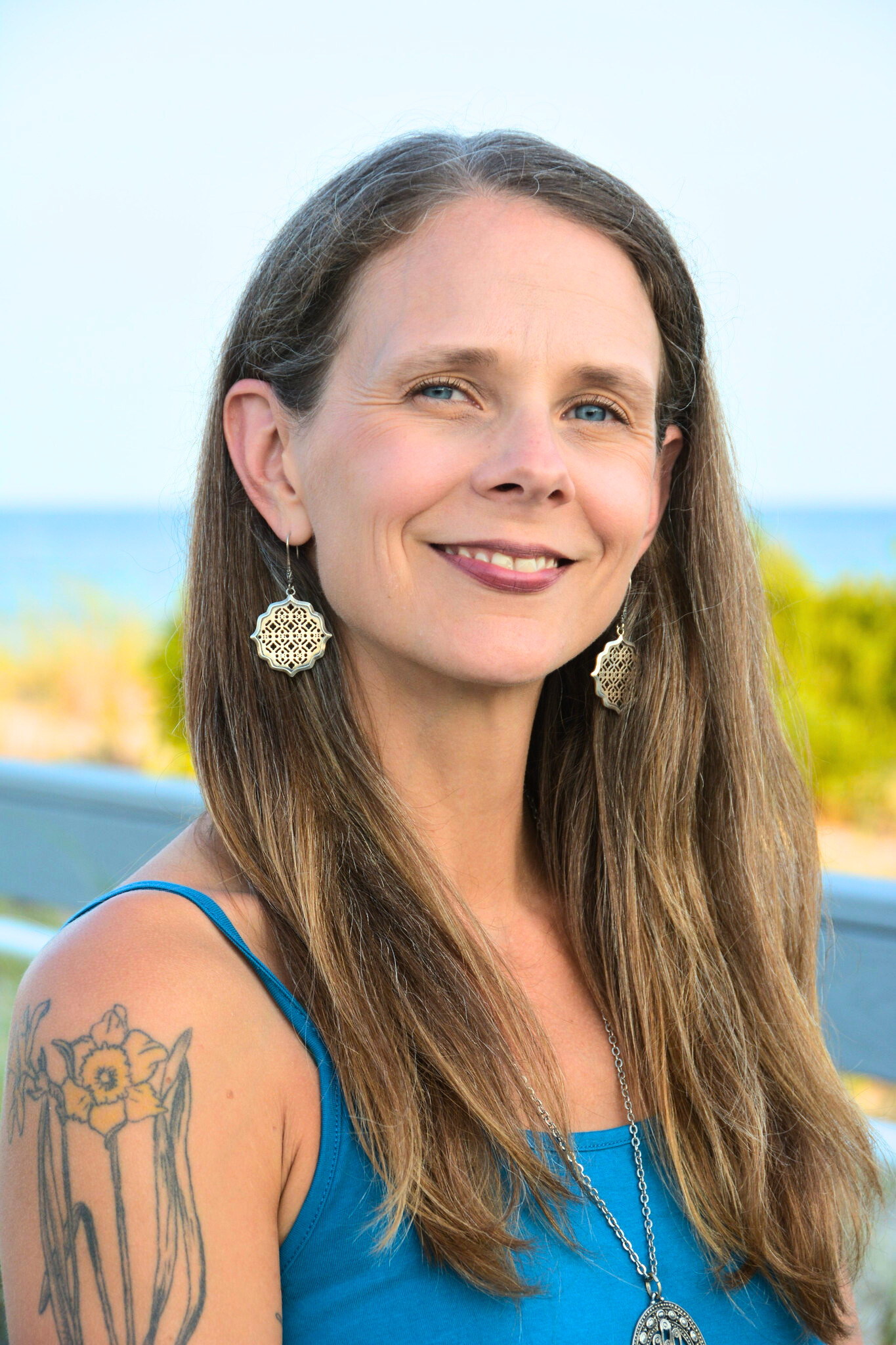
Death Doula
Jill McClennen is a certified death doula and a certified funeral celebrant through Insight Institute. As a funeral celebrant, Jill creates deeply personal, meaningful ceremonies that honor life and legacy, weaving together storytelling, ritual, and symbolism to help families mark transitions with authenticity and care. Her role is to design ceremonies that reflect the unique values, beliefs, and wishes of those she serves.
Jill is also the host of the "Seeing Death Clearly" podcast, where she engages in thoughtful conversations with guests about death, dying, grief, and living fully. She offers compassionate support, practical preparation, and deep emotional healing to clients and their families, providing services both in person and virtually.
Jill designs death-positive apparel to spark important conversations about death and grief in our communities. She believes in the power of open dialogue to normalize these conversations, creating safe space for people to explore and express their thoughts and emotions.
Her journey as a death doula and funeral celebrant has profoundly shaped Jill’s perspective on life’s priorities, fueling her mission to help others clarify their core values — regardless of the time they have left. She advocates for honest, open discussions about death and grief among friends and loved ones, including age-appropriate conversations with children from an early age.
More information about Jill’s services, her death-positive apparel, and her podcast can be found at: www.endoflifeclarity.com